Introduction
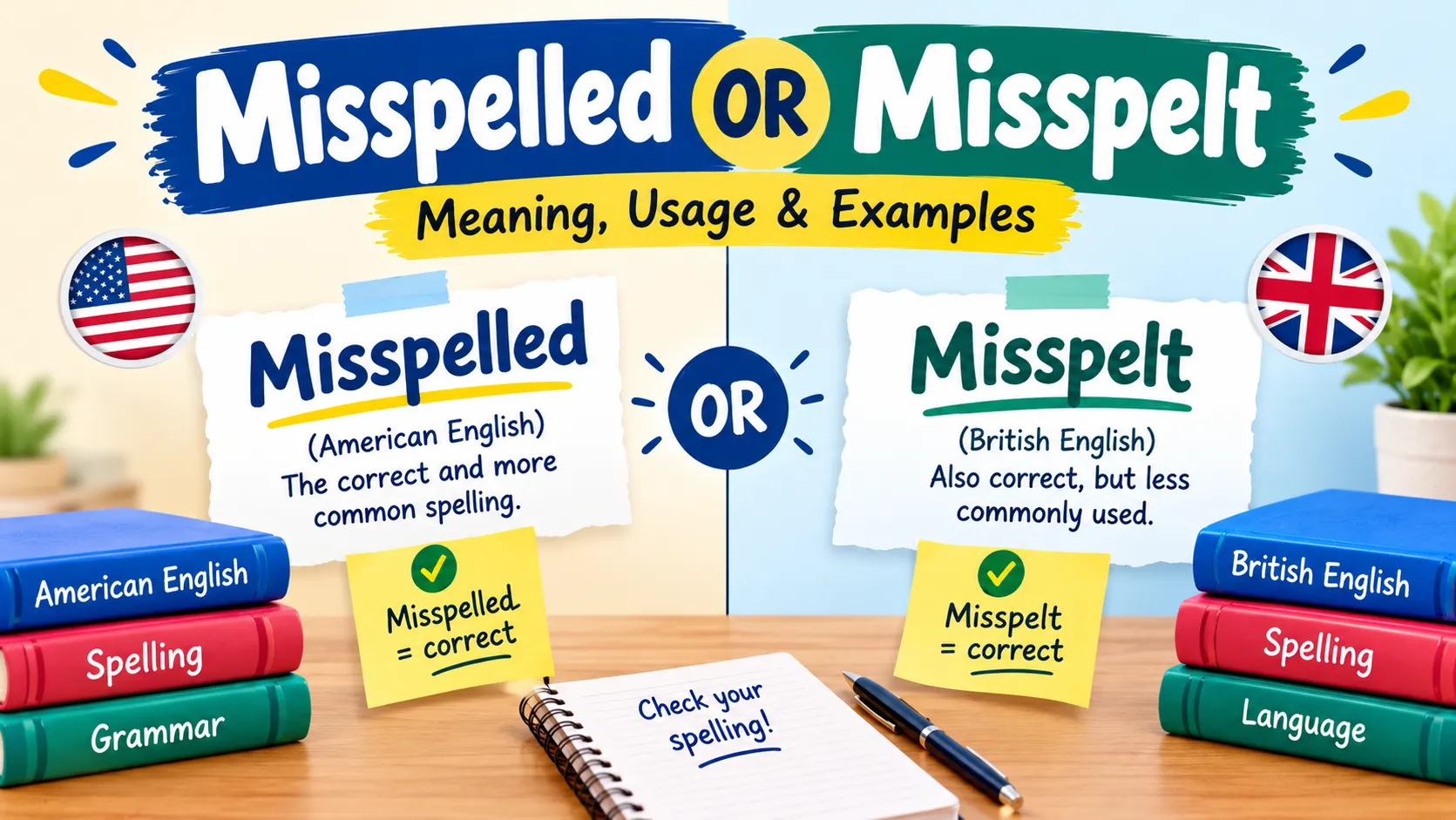
If you have ever Wondered whether misspelled or misspelt is the correct spelling, you are not alone. Both forms are correct, but they are used differently depending on the variety of English.
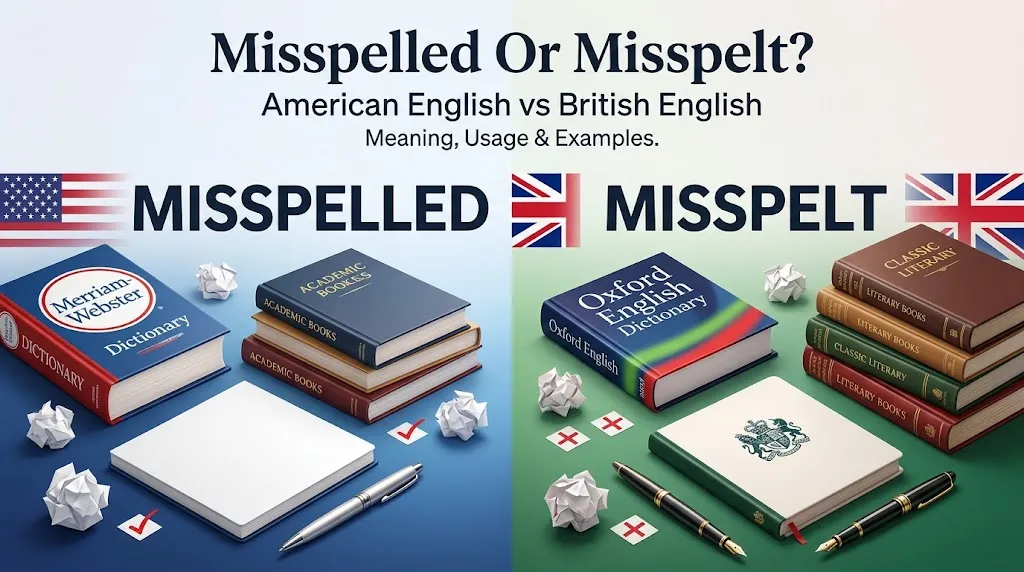
Misspelled is the more common choice in American English, while misspelt is especially common in British English. British English can also use misspelled, so neither form should automatically be considered wrong.
In this guide, you will learn the meaning of misspelled and misspelt, the difference between them, their pronunciation, correct usage, common mistakes, and which form you should choose in your writing.
Misspelled or Misspelt: Quick Answer
Misspelled and misspelt have the same meaning: they both mean that a word has been spelled incorrectly.
| Word | Common Usage | Meaning |
| Misspelled | Especially American English | Spelled incorrectly |
| Misspelt | Especially British English | Spelled incorrectly |
Examples
- The student misspelled my name.
- The student misspelt my name.
Both sentences are correct. Your choice mainly depends on the English variety you are using.
What Does “Misspelled” Mean?
Misspelled is the past tense and past participle of the verb misspell. It means that someone wrote or typed a word incorrectly.
For example:
She misspelled the word “necessary.”
The word misspell means “to spell a word incorrectly.” Cambridge Dictionary lists misspelled as the past form and also gives misspelt as a UK form.
Misspelled as a Verb
When misspelled describes an action that happened in the past, it functions as the past tense of misspell.
Examples:
- He misspelled my surname.
- I misspelled the word during the test.
- She misspelled the address in her email.
Misspelled as a Past Participle
Misspelled can also be used as a past participle with auxiliary verbs.
Examples:
- I have misspelled this word before.
- The name was misspelled on the document.
- She had misspelled several words in her essay.
Misspelled as an Adjective
The word can also describe something containing an incorrect spelling.
Examples:
- The teacher corrected the misspelled words.
- Please check the misspelled names.
- The document contains several misspelled terms.
What Does “Misspelt” Mean?
Misspelt has the same basic meaning as misspelled. It is an alternative past tense and past participle of misspell, particularly common in British English.
Examples:
- She misspelt my name.
- The word was misspelt in the report.
- He had misspelt the address.
The important point is that misspelt is not an incorrect version of misspelled. It is a legitimate English form.
Misspelled vs Misspelt: What Is the Difference?
The main difference is regional preference, not meaning.
| Feature | Misspelled | Misspelt |
| Meaning | Spelled incorrectly | Spelled incorrectly |
| American English | Very common | Less common |
| British English | Accepted | Common |
| Past tense | Yes | Yes |
| Past participle | Yes | Yes |
| Ending | -ed | -t |
So, if you are writing for an American audience, misspelled is usually the safest choice. If you are writing in British English, misspelt is a natural choice, although misspelled is also acceptable.
Cambridge and Oxford both recognize misspelt as a form of the verb misspell.
Is “Misspelled” or “Misspelt” Correct?
Both are correct.
The choice depends largely on the variety of English being used.
In American English
Misspelled is the standard and familiar form.
I accidentally misspelled her name.
In British English
Misspelt is commonly used, but misspelled is also accepted.
I accidentally misspelt her name.
Therefore, it would be misleading to say that misspelt is wrong or that misspelled is only American.
Misspelled or Misspelt in American English
American English generally favors the -ed form.
Use misspelled in:
- Academic writing
- School assignments
- Business emails
- Professional documents
- Websites and online content
- General American English
Examples:
- The report contains a misspelled name.
- I accidentally misspelled the company name.
- The software detected a misspelled word.
- She misspelled the title in her presentation.
If your audience primarily uses American English, misspelled is the most natural choice.
Misspelled or Misspelt in British English
British English commonly uses misspelt, but misspelled is also used.
Examples:
- The Student’s name was misspelt.
- Several words were misspelt in the letter.
- I noticed that I had misspelled the word.
This is part of a broader pattern in British English where some verbs can have both -ed and -t forms. Cambridge Grammar notes that British English allows both endings for several verbs such as learned/learnt, dreamed/dreamt, and spelled/spelt.
Misspell, Misspells, Misspelled, Misspelling, and Misspelt
Understanding the complete word family makes the difference much easier to remember.
| Form | Use |
| misspell | Base form of the verb |
| misspells | Present tense with he, she, or it |
| misspelled | Past tense and past participle |
| misspelt | Alternative past tense and past participle |
| misspelling | -ing form and noun |
| misspellings | Plural noun |
Examples
Misspell:
Try not to misspell the word.
Misspells:
He often misspells difficult words.
Misspelled:
She misspelled my name.
Misspelt:
She misspelt my name.
Misspelling:
There is a misspelling in this sentence.
Misspellings:
The teacher corrected several misspellings.
Why Does “Misspelled” Have Two S’s?
A common mistake is writing mispelled with only one s.
The correct spelling is:
misspell ✅
not:
mispell ❌
The word can be understood as mis- + spell. When these parts come together, the spelling is misspell, with two consecutive s’s.
The same pattern appears in its related forms:
- misspell
- misspells
- misspelled
- misspelling
- misspelt
So remember:
mis + spell = misspell
This can help you avoid the common error mispelled.
Misspelled vs Misspelt Pronunciation
The two forms are very similar in pronunciation, but their endings are different.
How to Pronounce Misspelled
Misspelled is pronounced approximately:
mis-SPELD
The ending has a /d/ sound.
How to Pronounce Misspelt
Misspelt is pronounced approximately:
mis-SPELT
The ending has a /t/ sound.
Is There a Pronunciation Difference?
Yes. The main noticeable difference is the final consonant:
- misspelled → /d/
- misspelt → /t/
The basic meaning remains the same.
Misspelled or Misspelt in Sentences
Seeing both forms in natural sentences makes the distinction easier to understand.
Examples With Misspelled
- I misspelled your name in the email.
- The student Misspelled an important word.
- She misspelled the address on the form.
- I noticed a misspelled word in the report.
- The title was misspelled on the website.
- He accidentally misspelled the company’s name.
- The document contains several misspelled words.
Examples With Misspelt
- I misspelt your name in the email.
- The student misspelt an important word.
- She misspelt the address on the form.
- I noticed a misspelt word in the report.
- The title was misspelt on the website.
- He accidentally misspelt the company’s name.
- The document contains several misspelt words.
The sentences have essentially the same meaning. The main difference is the regional form selected by the writer.
Common Mistakes With Misspelled and Misspelt
Mispelled ❌ vs Misspelled ✅
Mispelled is incorrect.
Correct:
The word was misspelled.
Remember that misspell contains two s’s after mi:
mis + spell → misspell
Misspeled ❌ vs Misspelled ✅
Misspeled is also incorrect because the word spell retains its double l in the relevant forms.
Correct:
I misspelled the word.
Misspelt Is Not Always Wrong
Some writers assume that misspelt is a spelling mistake. It is not.
Misspelt is a recognized form of misspell, particularly associated with British English.
Mixing US and UK Forms
Using either form is not automatically a problem. However, formal writing is usually clearer when you follow one consistent English style.
For example, if the rest of your document follows American spelling conventions, misspelled will usually fit better.
If you are consistently writing in British English, misspelt may be the more natural choice.
Confusing Misspell With Mispronounce
These words describe different mistakes.
Misspell means to write a word incorrectly.
I misspelled her name.
Mispronounce means to say a word incorrectly.
I mispronounced her name.
Writing and speaking are different, so the two verbs should not be confused.
Misspelled or Misspelt in Formal and Academic Writing
Both forms can appear in formal writing. The important consideration is the English variety and the style of the publication or institution.
In School and College Assignments
Use the form consistent with the English style your school or teacher expects.
For American English:
The student misspelled several words.
For British English:
The student misspelt several words.
In Exams
Follow the spelling conventions expected by your examination system or institution. If a particular English variety is specified, maintain that variety consistently.
In Business Emails
For an American audience, misspelled is generally the natural choice.
For a British audience, misspelt is also perfectly suitable.
In Professional Documents
Consistency matters more than trying to force one form into every context.
Choose the appropriate regional style and use it throughout the document.
In Online Content
Websites may have readers from many countries. If your website follows American English, use misspelled. If it follows British English, misspelt may fit better.
Which One Should You Use?
The easiest way to choose is to consider your audience.
| Audience | Recommended Form |
| American English readers | Misspelled |
| British English readers | Misspelt or Misspelled |
| International audience | Choose one style and stay consistent |
| American-style publication | Misspelled |
| British-style publication | Misspelt is a natural choice |
If you are unsure, misspelled is widely understood and is the safest general choice, especially in American English.
The important thing is not to treat misspelt as an error simply because it looks unfamiliar.
Misspelled vs Misspelt vs Spelled vs Spelt
These four words are related, but they do not all have the same prefix.
| Word | Meaning |
| spelled | Past form/past participle of spell |
| spelt | Alternative past form/past participle of spell |
| misspelled | Past form/past participle of misspell |
| misspelt | Alternative past form/past participle of misspell |
For example:
She spelled the word correctly.
And she spelt the word correctly.
She misspelled the word.
She misspelt the word.
The prefix mis- changes the meaning. Spell means to form a word correctly using its letters, while misspell means to spell it incorrectly. Cambridge lists spelled and UK spelt as forms of spell.
- Related To Another Article: https://grammixo.com/sense-vs-since/
Related -ed and -t Forms
The difference between misspelled and misspelt is part of a larger pattern.
Some verbs can have both forms in British English:
- learned / learnt
- dreamed / dreamt
- burned / burnt
- smelled / smelt
- spilled / spilt
- spelled / spelt
British English commonly allows both -ed and -t forms for several verbs, while American English often prefers the -ed form.
This explains why misspelled and misspelt can both exist without one being a simple spelling error.
Quick Test: Misspelled or Misspelt?
Choose the form that best fits the sentence and the intended English variety.
1. I accidentally ______ your name.
a) misspelled
b) misspelt
Answer: Both can be correct.
2. Which form is especially common in American English?
a) misspelled
b) misspelt
Answer: Misspelled
3. Which form is especially associated with British English?
a) misspelled
b) misspelt
Answer: Misspelt
4. Is “mispelled” correct?
a) Yes
b) No
Answer: No. The correct spelling is misspelled.
5. What does “misspell” mean?
a) To pronounce a word incorrectly
b) To spell a word incorrectly
Answer: To spell a word incorrectly.
6. Can British English use “misspelled”?
a) Yes
b) No
Answer: Yes.
7. What is the -ing form of “misspell”?
a) misspelling
b) misspellingg
Answer: Misspelling
8. What is the plural noun?
a) misspellings
b) misspells
Answer: Misspellings
People Also Ask
Yes. Both are correct forms of the verb misspell. Misspelled is especially common in American English, while misspelt is especially common in British English.
Misspelt is particularly associated with British English. American English generally prefers misspelled.
Yes. Misspelled is the standard and very common form in American English. It is also accepted in British English.
Yes. Misspelt is a natural and widely recognized British English form.
No. It is not simply an outdated spelling. It remains a recognized form of misspell, particularly in British English.
Final Verdict: Misspelled or Misspelt?
Misspelled and misspelt are both correct.
The main difference is regional preference. Misspelled is the standard and more common choice in American English. Misspelt is especially common in British English, although British English also accepts misspelled.
The simplest rule is:
American English → misspelled
British English → misspelt or misspelled
So, if you write misspelled, you are not making a spelling mistake. If you write misspelt, you are not making one either. Choose the form that matches your intended English style, and keep your spelling consistent throughout your writing.

1 thought on “Misspelled or Misspelt: Which Is Correct? Meaning & Examples”