Introduction
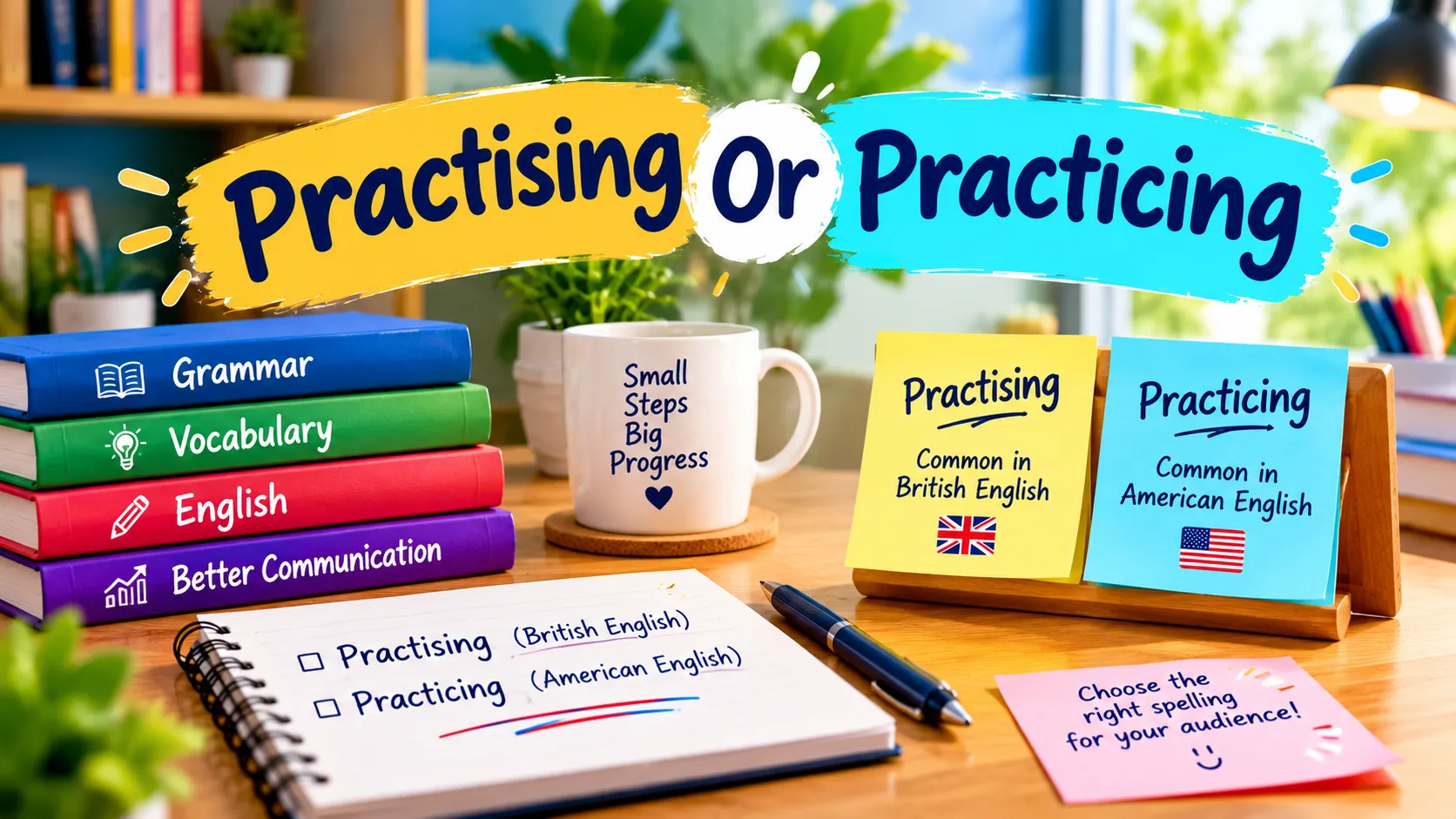
Practising and practicing have the same meaning, but the spelling depends on which variety of English you are using.
Practising is the standard spelling in British English, while practicing is the standard spelling in American English. Both are the -ing forms of the verb used for Activities such as improving a skill, preparing for something, or working in a profession.
The difference becomes easier to understand when you look at the related words practise and practice.
Practising or Practicing: Quick Answer
- Practising = British English
- Practicing = American English
- Both are the present participle or -ing form of the verb.
- The meaning is essentially the same.
- In British English, practise is normally the verb and practice is the noun.
- In American English, practice is used for both the noun and verb.
So, neither practising nor practicing is universally wrong. The correct choice depends on the English variety you are following.
Practising vs Practicing: What Is the Difference?
The main difference is spelling, not meaning.
British English generally keeps a distinction between the verb practise and the noun practice. When the verb takes the -ing ending, it becomes practising.
American English uses practice as both the noun and verb. Its -ing form is therefore practicing.
| Feature | British English | American English |
| Verb | practise | practice |
| -ing form | practising | practicing |
| Noun | practice | practice |
| Example | She is practising the piano. | She is practicing the piano. |
Both sentences communicate the same idea.
Simple Rule
British English: practise → practising
American English: practice → practicing
Once you know which English variety you are writing in, choosing the correct spelling becomes straightforward.
What Does “Practising” Mean?
Practising is the British English spelling of the -ing form of practise.
It can describe repeatedly doing something to improve a skill, preparing for an activity, or carrying out professional work.
Practising to Improve a Skill
You can use practising when someone repeatedly performs an activity to become better at it.
Examples:
- She is practising the piano.
- I am practising my English.
- They are practising their presentation.
- He is practising his pronunciation.
Practising for an Event
The word can also describe preparation for a future performance, competition, test, or event.
Examples:
- The team is practising for the final.
- We are practising for tomorrow’s presentation.
- She has been practising for the concert all week.
Practising a Profession
In British English, practise can also mean to work professionally in a particular field.
Examples:
- She is practising medicine.
- He has been practising law for ten years.
- The doctor is practising in London.
What Does “Practicing” Mean?
Practicing is the standard American English spelling of the same verb form.
Its meaning does not change simply because the spelling contains c instead of s.
Examples:
- She is practicing the piano.
- I am practicing my English.
- They are practicing for the competition.
- He is practicing medicine.
American English uses practice as the verb, so its -ing form is practicing.
Practise, Practice, Practising, and Practicing Explained
These four forms can be confusing because British and American English handle the verb differently.
| Word | British English | American English |
| practise | Verb | Not normally used as a verb |
| practice | Noun | Noun + verb |
| practising | Verb -ing form | Not normally used |
| practicing | Not normally used | Verb -ing form |
For example, British English uses:
I practise speaking English every day.
American English uses:
I practice speaking English every day.
When the same verbs take the -ing form:
I am practising speaking English.
I am practicing speaking English.
The meaning remains the same.
British English: Practise and Practice
British English traditionally distinguishes between the verb and noun.
Practise as a Verb
Use practise when you mean the action of doing something repeatedly or working professionally.
Examples:
- I practise the piano every evening.
- She practises her speech before every presentation.
- The doctor practises medicine.
Practice as a Noun
Use practice when you are referring to the activity, experience, or professional organization.
Examples:
- I need more practice.
- Regular practice improves your skills.
- She works at a dental practice.
- It is good practice to check your work.
This distinction explains why British English uses practising rather than practicing.
American English: Practice and Practicing
American English normally uses practice for both the noun and verb.
Examples:
- I practice the piano every day.
- She practices her pronunciation.
- He practices medicine.
- They are practicing for the competition.
There is no need to change practice to practise when it Functions as a verb in American English.
Practising or Practicing in British and American English
Understanding the complete word pattern makes the difference easier to remember.
British English
British English uses:
- practise
- practises
- practised
- practising
Examples:
- I practise every day.
- She practises her presentation.
- He practised before the match.
- They are practising now.
American English
American English uses:
- practice
- practices
- practiced
- practicing
Examples:
- I practice every day.
- She practices her presentation.
- He practiced before the match.
- They are practicing now.
The spelling pattern stays consistent within each variety of English.
Practising or Practicing in a Sentence
Both forms can appear in the same types of sentences. The spelling changes according to the English variety.
British English Examples
- I am practising my English.
- She is practising the piano.
- They are practising for the exam.
- He has been practising every morning.
- The doctor is practising medicine in London.
American English Examples
- I am practicing my English.
- She is practicing the piano.
- They are practicing for the exam.
- He has been practicing every morning.
- The doctor is practicing medicine in Chicago.
Notice that the meaning and sentence structure remain the same.
Practising or Practicing for Different Activities
The word is commonly used with many different activities.
1. Practising or Practicing a Skill
- She is practising her writing skills.
- She is practicing her writing skills.
2. Practising or Practicing a Sport
- The players are practising before the match.
- The players are practicing before the match.
3. Practising or Practicing Music
- He is practising the guitar.
- He is practicing the guitar.
4. Practising or Practicing a Profession
- She is practising law in Manchester.
- She is practicing law in New York.
The choice between the two spellings is based on the variety of English, not the activity being described.
Is “Best Practice” or “Best Practise” Correct?
Best practice is the standard expression.
Here, practice is a noun, so even British English uses practice rather than practise.
Examples:
- It is best practice to check your work.
- Following safety rules is best practice.
- These are considered industry best practices.
Therefore, writing best practise is generally incorrect when you mean the established noun phrase best practice.
Practice or Practise in British English?
A simple way to remember the British distinction is:
Practise = verb
Practice = noun
Compare these sentences:
- I practise every day.
- I need more practice.
- Doctors practise medicine.
- She works at a medical practice.
If the word describes an action, practise is generally the correct British form.
If it refers to the activity, experience, or professional organization, use practice.
Common Mistakes With Practising and Practicing
Mixing British and American Spellings
One common problem is switching between spelling systems in the same piece of writing.
For example, using practise in one sentence and practice as a verb in another may make the writing inconsistent if you are following British English.
Choose your preferred English variety and keep the spelling consistent.
Using Practising in American English
Practising is not the standard American spelling of the verb’s -ing form.
American English normally uses:
practicing
Using Practicing in British English
In standard British English, the verb’s -ing form is normally:
practising
Confusing Practice and Practise
This confusion mainly affects British English.
Incorrect:
I need to practise before the concert.
I need more practise.
Correct:
I need to practise before the concert.
I need more practice.
The first word is a verb; the second is a noun.
Writing “Best Practise”
When practice is being used as a noun in the expression best practice, keep the c.
Correct:
It is best practice to review your work.
Is “Practising” British or American?
Practising is the standard British English spelling.
It comes from the British verb practise.
American English normally uses practicing instead.
So:
British: practising
American: practicing
Is “Practicing” Correct English?
Yes.
Practicing is correct Standard English in American English.
It is not a spelling mistake simply because British English uses practising.
For example:
She is practicing her speech.
This is standard American English.
In British English, the equivalent sentence would use:
She is practising her speech.
Both forms are correct within their respective spelling systems.
Which Spelling Should You Use?
The best spelling depends on the variety of English you are using.
For British English
Use:
practising
Example:
She is practising for the competition.
For American English
Use:
practicing
Example:
She is practicing for the competition.
For International Audiences
If your readers come from different English-speaking countries, the most important thing is consistency.
Do not randomly switch between British and American spellings. Choose a style that fits your audience, organization, publication, or preferred style guide, and use it consistently.
Practising or Practicing for IELTS and Academic Writing
There is no universal rule that makes one spelling correct for every academic situation.
The appropriate choice depends on the English variety or style convention being followed.
If you are writing in a British English context, use:
practising
If you are following American English conventions, use:
practicing
For academic work, the safest approach is to follow the spelling conventions required by your institution, teacher, publisher, or style guide.
The important thing is to maintain consistency throughout your writing.
- Related To Another Article: https://grammixo.com/labeling-or-labelling/
Easy Memory Trick for Practising and Practicing
Remember the two basic patterns:
British: practise → practising
American: practice → practicing
A useful way to remember the British forms is:
British verb = S
So:
practise → practising
For American English:
American verb = C
So:
practice → practicing
This simple connection can help you choose the correct form quickly.
Practising or Practicing: Comparison Table
| Question | Answer |
| Is practising correct? | Yes |
| Is practicing correct? | Yes |
| Which is British? | Practising |
| Which is American? | Practicing |
| British verb | Practise |
| British noun | Practice |
| American verb | Practice |
| American noun | Practice |
| British -ing form | Practising |
| American -ing form | Practicing |
Practising or Practicing Practice Quiz
Test yourself with these sentences.
1. She is ______ for the concert.
British English: practising
American English: practicing
2. He has been ______ English every morning.
British English: practising
American English: practicing
3. The doctor is ______ medicine in London.
British English: practising
American English: practicing
4. It is good ______ to review your work.
Answer: practice
The fourth sentence is different because practice is functioning as a noun.
People Also Ask
Both are correct. Practising is the standard British English spelling, while practicing is the standard American English spelling.
Yes. Practising is the standard British English -ing form of the verb practise.
Yes. Practicing is the standard American English -ing form of the verb practice.
It is not the standard American spelling. If you are following American English conventions, use practicing.
Standard British English normally uses practising for the verb’s -ing form.
Final Answer: Practising or Practicing?
Practising and practicing are both correct spellings.
The difference is based mainly on British and American English:
- Practising = British English
- Practicing = American English
The meaning is the same. The Important thing is to use the spelling that matches your chosen variety of English and remain consistent.
For British English, remember:
practise → practising
For American English, remember:
practice → practicing
Once you understand this pattern, choosing between practising and practicing becomes simple.
